Showing posts with label U106. Show all posts

Tuesday, June 30, 2015

Big Y Cluster Bomb and Thoughts about Migration

It's kind of hard to believe it's been a few years since I posted on the 458.2 break up of the Cumberland cluster in the R-Z18 project. I figured it's time to go forward a bit. Look at new members on each side of that divide and think about our Big Y results so far.

Data is coming in fast

Big Y data is coming in very fast now, with loads of new SNPs to map. A process that used to take years is happening in a few months and the volunteer admins of our Y DNA groups are being presented with new information all the time. Joining a Y haplogroup project is one easy way to stay informed and learn more about your group and what next steps you may want to take.

A Cumberland cluster (DF95) person is lucky to fall under several projects. In order of inheritance down the family tree:

All the groups are FTDNA groups but they also have their own separate websites or forums that you can get to from their groups page.

The Timeline

The U106 group has been putting together different age ranges for the SNPs below U106 based on Big Y data and a lot of math that I don't completely understand. I know that it's complicated and that there are several methods and also that it's very hard to know things for certain so everything is done at "confidence levels". 

So a huge caveat, as this new post proves, nothing is set in stone and I didn't do any of the work to get these age estimates.

So let's begin with U106.

Here is a google map pinpoint for the oldest U106 positive male (labeled Rise98) found in Lilla Beddinge Sweden. Listed as being from the Battle Axe culture and aged between 2275 and 2032 BC. It was interesting to find a U106 sample in southern Sweden, but I think everyone in U106 circles was just happy to find one in Europe. So far U106 samples in ancient DNA have been hard to come by and age ranges are all estimated.


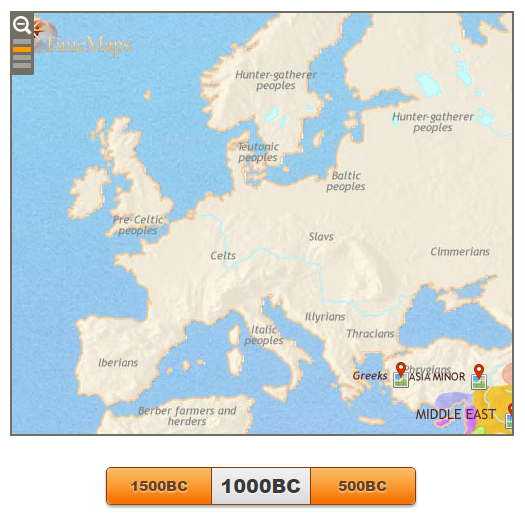
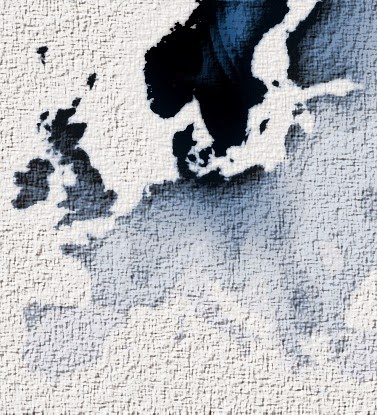
It would be somewhere in this time period that Z18 also appeared on the scene. Here are a couple of nice maps of Europe between 2500BC and 1500BC from timemaps.com:


In 2013 I was looking at a world map for Z18 that started around 1000BC. Today I'm looking closer to 2200BC. That puts the origin point in time for Z18 not very far from the origin of it's parent U106 (estimated at about 2400BC). So the two maps above pretty much cover that ground.

I'm going to diverge a bit further from the comparisons I made in 2013.

Then I did a pretty broad comparison for the different groups with some migration patterns that seemed to fit them. With time, come new results.

For instance, when I looked at the East Anglia Cluster in 2013 it was easy to see the movements of the Anglo Saxons. It probably doesn't negate that movement but they have widened their scope to include someone from Sweden and Poland in their ranks, making their range similar to the Cumberland cluster.

When looking at the current age ranges from Big Y tests for the different SNPs that define the East Anglia Cluster, Polish Cluster (which contains two men from Switzerland) and the Cumberland Cluster, they all appear to crop up at about the same time right around 1300BC and then branch out from there.

The other striking thing (to me anyway) from the Big Y testing was that, so far, these clusters seem to branch right off the root Z18. Time and testing may change that but so far, these clusters seem to be in their own silos, independent of one another for a long long time. I had wondered if we would see some hidden ties to each other through big Y but that does not seem to be the case. Meanwhile, our much older brother Z372 and it's child L257 have lots of branching and layering.

Each cluster has grown and added new locations and variations, their home ranges definitely overlapped at different points (especially in Poland it seems like), but they also seem somewhat more like lonely little islands of Y DNA that sat in a cold sea for about a thousand years waiting to break out.

Here is a map of 1500 to 1000BC along with a description from Wikipedia of what was going on in about 1300BC:


c. 1300 BC, the Indo-European cultures of Central Europe (among them Celts, Italics and certainly Illyrians) change the cultural phase conforming to the expansionist Urnfield culture, starting a quick expansion that brings them to occupy most of the Balkans, Asia Minor, where they destroy the Hittite Empire(conquering the secret of iron smelting), NE Italy, parts of France, Belgium, the Nederlands, NE Spain and SW England. (taken from the Bronze Age at Wikipedia)

Given that U106 was already in Sweden (at least visiting) a thousand years before this, I'm going to suppose that our Z18 clusters were hanging out with the "Teutonic Peoples" there, living the high life of the Nordic Bronze age. That's a guess though. 

Meet the Cumberlands

Here is a pinpoint map of the Cumberlands that are 458.2 negative. They're expected to be the slightly older group as one of their men originated the 458.2 and all the 458.2 plus men inherit that from him. You'll see that I highlighted one there in Norway. That is a new testers since 2013. My old map skirted Denmark and only included the Netherlands and Germany on the continent. 


This is that same map with the 458.2 positive men layered in blue. Never mind the different shapes for a moment, just notice that their ranges are not that different now that we have more testers. The 458.2 negative men still haven't broken into Denmark or Poland, but that could be a matter of time. As always, I notice that the child covers more ground and is more prolific than the parent.


Now we can look at the shapes. For the moment there is only one 458.2 negative person who has tested Big Y and they haven't shared their results. So we only have the information from the 458.2 positive men to work with. 

Both 458.2 positive and negative are typified by DF95 and CTS12023, but no one is certain exactly where they part ways. 

In that map the stars, diamonds and squares represent big Y tested Cumberland Cluster families. In Big Y testing all the 458.2 men shared 14 or 15 SNPs with each other, not shared by anyone else. Without any variation it's hard to tell which came before what. The age estimate was based on a single SNP from that group of 15 and it was dated at about 1242 BC (not too far from the origin time of some of the other clusters). Also, the other Z18 big Y groups seemed to have long runs of common SNPs like this. To me that suggests either a bias in testing (not enough testers yet) or a pinch point where all of us are fairly recently (in the big picture of humanity) related to one man..whose buddies may have petered out.


The Blue Stars

In the second map the blue star in Norway and in Ireland represent two men who leave the rest of the crowd right there at those 15 shared SNPs and go their own way. This split in the Cumberland Big Y is (for the moment) marking the oldest Cumberland Ys. Now we have a point in time and a couple of locations for a beginning. Although the estimate for the SNP was in the 1200s BC, the estimate for the date of a last common ancestor for everyone is much closer in time at about 250 BC. 

The Blue Squares and Diamonds

I'm lumping these two together because the blue squares and blue diamonds continue together for another 4 or 5 SNPs. The one picked for aging is estimated at 58 AD while the most recent common ancestor is possibly as close as 380 AD. Beyond this, the blue squares and blue diamonds go off to form their own groups with their own SNPs and layers.

What is interesting here is that (as luck would have it) we had at least two people from each group (squares and diamonds). Unlike the split for the blue stars where they just part ways, these two groups continue for several more SNPs each. 

For the time being one group is hanging around the U.K. while the other is split between the Netherlands and Poland.  That second group (the diamonds) is very interesting because so many of the Z18 clusters contain Polish recruits.  In our cluster the Polish recruit splits off later (closer to us in time) than the recruit from Norway or Ireland

You can see the tale I'm spinning here is similar to the one from 2013. I'm still thinking of a nice central jumping off point for all these people..maybe in that "teutonic peoples" zone. The Scandinavians are great movers of people and I'm still thinking we hitched a ride with them to the Netherlands and Poland and England.

It will be hard to wait for more big Y testing from other groups. Do the Swiss in the Polish cluster form their own group away from their Polish cousin? Is the Polish tester in the East Anglia group older than the others or younger? How about their tester from Sweden? What do the other Cumberland cluster Polish testers look like? How about the 458.2 negative tester from Norway? How does he stack up to the 458.2 positive Norway tester? Where does the 458.2 guy from Denmark fit in?

Big Y has the power to answer so many questions...for a price. Looking at all the new information coming in, I'm sure a revision for this one will be necessary in a matter of months rather than years. 


Saturday, July 5, 2014

Ball 3: Results from Denmark

I attempted to contact four or five Cumberland candidates from Denmark. Some from Ancestry.com some from Ysearch and a couple from the Scandinavia project at FTDNA. Of the people I contacted three of them were definitely in the DYS458.2 section of the Cumberland cluster.

One of my contacts agreed to run the test for DF95 and just recently came back positive. So now we have a confirmed group member from Denmark, which to me was conspicuously absent in a group that appears to follow the migrations of germanic peoples so well.


Friday, November 8, 2013

Continuing Thoughts about Migration

I was tooling around the FTDNA site checking on my DF95 results and happened into the "maps" area. Since I'm always excited about map speculation, I checked it out. It's very basic. Since I'm in R1b it has that group highlighted with a nice line going to the  general vicinity of France. What was interesting was the placement of Haplogroup I.

Pardons for the small image but this is what they have there (undoubtedly old):


What I found so interesting about this particular map was the arc that I takes and that it seems broadly similar to the path of Z18 and many of it's subgroups. Is it possible that our Z18/Z14 only group in the last post was caught up in the current of I as it intersected and headed north? Maybe better put, is it possible that the circumstances that led I to go north on that path, also led Z18/Z14 to do the same?

I don't really know enough about I and it's movements or timeframes. It would be interesting to see if they coincide in some way or if this map is just so old that it's not a relevant picture of a migration pattern.

For interest, here is a gradient map of haplogroup I M253 from the Wikipedia:


Monday, November 4, 2013

458.2 Cluster Bomb..and thoughts about migration

I'm unsure about the continued relevance of my own Y DNA to the search for the Thompson family, but I am hopeful that it may yet lead me to some conclusion about my grandfather and his male line. So, we march on.

What you see here is really just a gathering of ideas for my own benefit. Please don't take it all too seriously as new things are discovered every week and I'm an average person trying to make sense of things the best way I know how. I am likely neither fair nor balanced.

For reference, here is a quick chart stolen from the Z18 and subgroups page:


What you can see there (click it for a larger view) is R1b at the top. That is a huge group of men in Europe. It breaks down into a few groups, the two here are P312 and U106. P312 is the larger group and is roughly labelled "Celtic" by many people because it trends towards areas where Celtic culture was prevalent. That is the branch I think many Thompsons would expect to be on. We are on U106, a large group but smaller than P312 which seems most prevalent in "Germanic" speaking areas today.

U106 breaks down into a few groups, but our focus would be people who are Z381 and people who are Z18. Z381 is the lions share of U106. L48 underneath that is roughly the largest group with many subgroups underneath it. We are down the smaller sibling group of Z381,  Z18. Beneath Z18 you have Z14 which leads to a child Z372 and then Z372's child L257. Z14 has other children, L343 and DF95.

We are Z372- so we remained in Z14, clustered with like individuals until just recently.

We got our news about the DYS458.2 in our Z14 Cumberland cluster. Some have it and some don't. Oddly (to me) the group that has the 458.2 is larger than those without. The TMRCA for 458.2+ and 458.2- is around 1300 years ago..so around 700CE. Hey it's on this side of the BC/CE line!

Several of us tested for DF95..my results are due next week but it is probably a "given" that I'm positive because multiple members of my cluster are also positive. So DF95 occurs in both 458.2- and 458.2+. The age for DF95 was given as about 1500 years ago, so 500CE. It came first before our 458.2 split.

So within a few hundred years of DF95 SNP we develop a DYS458.2. Not too shabby.

DF95 is a brother to Z372. We know they don't go together because multiple DF95 people are Z372- and at least one Z372 is DF95-. So they evolved separately from Z14 (the parent of both DF95 and Z372). 

Z372 is considered a pretty Norse leaning SNP. DF95 so far since it's basically only been found in Cumberland seems to lean to the South side of the Baltic and North Seas.

I have made mention that the DYS458.2+ seems odd to me because it covers more ground than the original flavor (DYS458.2-). That could be lack of sampling. Maybe we're just missing men from Poland who should be 458.2-. It's odd though in that general east to west migration model that the parent of a group would only occur in the western half of the area covered by the child group. Of course, I am a simple person so simple migration paths make more sense to me, but people rarely do things in a simple way.

So I decided to step back and look at Z18 (at least our side of the house) and try to get my bearings and wrap my head around what I'm seeing. This is what I gathered:


z18+ z14- (so these are the ultimately Z18 individuals not down any known path). This isn't based on frequency so there may only be one person in each place. There are very few Z18 Z14- people. There again, a parent group is much smaller than the child group.

France
Switzerland
Scotland
Germany
Belgium

Here's a map I made with google maps


A fairly West leaning and continental group with pretty good coverage North to South. To me that is kind of striking, Z18 is a major (if relatively small) child of U106 and U106 is pretty wide spread in Europe trending towards Germanic speakers, certainly occurring in these countries with good representation. It's the Westerly lean that strikes me for this group. That, and it doesn't seem to crowd around the North and Baltic sea so much mainly because there just aren't representatives from the Netherlands, England, Denmark, Poland and Norway currently. 


It's hard to make much of this group because it's so small. If Z18 is roughly 3000+ years old these men would have been part of multiple migrations over a long, long time. Someone who was U106+ mutated to Z18 and his children went on to be about 1/3rd as large as the Z381 population. Z381 mutation and Z18 mutation are siblings on the tree, but could be separated by many centuries and a lot of geography.

So here's the most concise map I could find for 1000BC: 


That's our list of suspects for Z18. Modern continental Z18 (everything else negative) today seems to occupy the part of the world labelled "Celts". There is great danger for error in assigning current geo-locations for 3000 plus year old DNA. Especially from a single sample form each country. For fun...Lets leap forward. Here is a map from 500BC:


So at 500BC we're starting to see things we would recognize today. The Teutonic peoples have split up into Scandinavians and Germans and pushed south into the Celtic world (this idea is based on language studies I think...along with archaeological evidence). Z18 would be well established somewhere in this world. Jumping forward, Here's a simple map of Europe around 200BC also stolen from timemaps.com:


So, somewhere in that great unwashed world, maybe labelled Celts in 1000BC or  "Gaul" or "Germans" in 200BC,  Z18 came into being in a single U106 man.  The people who don't diverge end up, thousands of years later in those modern countries from the first map above. Who were the original Z18 family? Who knows, there are a lot of "Germano-Celtic" tribes generally in that area and without actual remains tested, how could anyone say?

There are other migration theories as well. I'm taking a position today and thinking about it as static, but I've heard that you can look at the fallout of a genetic group (where they ended up at some geographic barrier) and try to bring the dots back to a point. In the case of Z18, maybe we guess came from the east because they are peppered to the west. Maybe they hit the alps to the south and the ocean to the west and called a halt.

Also good to remember that at this time on these maps you already have Z14 in the mix since it is about 3000 years old. Also, what we know most about the world is coming from those two colorful groups at the bottom of that last map. The Greeks and Romans. Lots of grains of salt to be had.

Anyway, it's speculative at best but interesting to note that we're lacking our friends in Scandinavia and Poland and the Netherlands. So people were obviously on the move, but what got them moving?

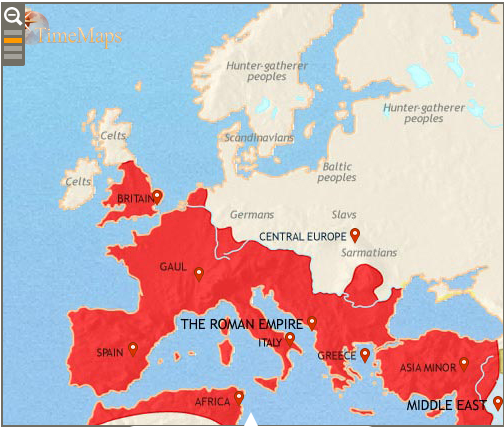
Here is a nice map of Europe around 30BC taken again from timemaps:


Here is a map from 200AD:


Facing this red swarm, some groups are going to be okay, but very obviously a lot of people are going to die, be displaced and invade other territories in the face of an organized superpower like the Romans. At this point (200AD) we may have Z372 branched off from Z14 and maybe L257 branched off from Z372? I think Z343 would also be in play with it's 1900 year TMRCA.


Z14+ (Child of Z18). These are people who have not tested positive for down stream SNPs.

England
Netherlands
France
Scotland
Sweden
Germany
Ireland
Denmark
Wales
Finland
Poland
Switzerland

Here's a map of that area. Keep in mind that I'm outlining modern nation boundaries that obviously did not exist, so the map is way off and also again may be missing representatives from specific nations. As a for instance, the total area of Sweden is not inhabited by armies of Z14 men..the populations hug the coasts there.


So this is the big child of Z18..Z14. Z14 is estimated to be about 3000 years old. So these people who tested Z14 and nothing more, had 3000 years to get where they are going and it's a lot more geography and more people than Z18. 

Cumberland was in this group until a few weeks ago. Here we have the same group of Z18 countries but with many more nations added and a more familiar pattern that crosses the North and Baltic Seas. The Scandinavian presence is much larger here and the range is pushed east by Poland and Finland. I'm discounting the contribution of  the isles because of the bias towards Isles testers and because it's one of those physical barrier destinations that are likely to get people all bunched up. My guess is that we're missing some testers from Norway and Belgium.

Again, when thinking about history for the maps here, Z14 and Z18 have an overlapping range and timeframe. Z14 appears to be very popular, leaving it's parent in the dust. Z14 also seems to have a classic "Germanic/Baltic/North Sea" spread you'd expect from a descendant of U106. I may be doing a disservice by not having exact geo-pins for these people. Maybe I'll tackle that later. On to the children of Z14.

Z372+ (but nothing more) which includes

Netherlands
Scotland
Sweden
England
Italy
Norway


Again, this map exists without regard really for number of people in a place or downstream SNPs like L257..and realizing that people are likely missing. This is a rough map of current nations for Z372. This group is for obvious reasons thought of as a Norse group. There is a member from Italy that is not shown on the map. I don't want to forget about them! So here is a map of viking settlements that includes Italy:


I think the general theory on this group (except for Italy) is conveyed in this viking invasion map stolen from the BBC's primary school history site:


It would be easy to see the Baltic as a squishy border for Z372. A Z14 person maybe in that fluid area becomes Z372 and carries it's popularity north and west? This group I think is what one might expect from a child group. The geographic area covered by Z14 is sort of "halved" by it's child Z372.


East Anglia Cluster L343 (for the moment seems to define the "East Anglia Cluster" and is an SNP that occurs in multiple clades) DF95-, Z372-

England
Ireland
Scotland
Germany


It's a decent sized cluster but so far pretty specific and I think the current theory on this group is summed up by this map stolen from Wikipedia:


EAC-L343, again seems to live in a subset of areas where Z14 exists. Roughly also heading west, likely from the first East Anglia Cluster-L343 man...maybe living in Denmark or  Germany?

When looking at this anglo-saxon invasion map, and the one above, it may be helpful to note that the broader groups all the way up the tree to Z18, U106, Z381, P312 are also going to be represented in these migrations. Genes don't always favor political or social boundaries. You may be more likely to run across P312 in France but it doesn't mean the others are absent...just maybe not as popular. 

Also the Romans were great movers of people. So you may note that where U106 and it's children have a great foothold in England is also where Rome had a great foothold in England.

Okay, so we are not part of Z372 and haven't tested positive for L343 (that I know of) but I think it's good to look at them as examples of possibly narrowing the geographic locations of some of these Y chromosome groups. So far, it looks like Z372 is the sibling of DF95.

We are a part of DF95..which may come to define our Cumberland cluster. I'm going to cheat because I've had a long time to look at my matches and I'm pretty sure my matches from Denmark and Switzerland would also be DF95+. I'm going to cheat in another way. I know the group is split by DYS458.2, but I'm ignoring that here:

DF95+
England
Ireland
Netherlands
Wales
Poland
Germany
Norway
Belgium
Possibly Denmark (my matches at ancestry and Ysearch Peterson and Hansen)
Possibly Switzerland (my matches at Ysearch Steiner)


The DF95 (and possibly CTS2206+ based on a recent test result) group is basically the Cumberland cluster at this point. Here we are, found pretty much everywhere Z14 is found but we lack the Finns and the Swedes that are so prominent in Z14 and in Z372. The Corsons are in this group and they may well be Swedes but they may also be from the Netherlands so it's hard to tell. We're missing France too. All of that could be lack of testing. The best guess is DF95 crops up around 500CE.

Here is the super rough map of Europe around the time DF95 is thought to have popped into existance in some Z14 male:


If you zoom in, you'll see the Frankish state, rough Saxons and Angles and Danes. Other tribes are listed but this is well into a movement of people during the Germanic Migration period. It would be hard to pick just one. Also, 500CE is a really rough guess based on the differences in the STRs of our cluster. DF95 may be much younger or older once more data is available. 

There is also room for DF95 (or CTS2206) to grow beyond our cluster as there are still a few Z14 groups out there who have not tested for it yet like the Polish cluster, the Finland cluster and the Z14* cluster..

Another point of interest I want to spend time on here is that  we're vastly outnumbered. The other branches of U106 dominate all these areas. Although Cumberland as a whole is large for Z14 groups..it's small in the context of the rest of U106 and it's really spread out. 20 to 30 individuals represent that DF95 chunk of the planet. And again, that current map doesn't represent one movement but 1500 years of movement.

For the next two breakdowns I need to remove Steiner and Switzerland from my list because although I suspect they have a DYS458.2 (Genebase refused to give a value for their DYS458 saying it was an "anomaly" and would not be helpful for matching), I'm not certain they have one so they are out. Booo.

458.2- (Cumberland Cluster Members who do not carry the DYS458.2 mutation. They are DF95+)
England
Netherlands
Ireland
Possibly Netherlands or Sweden


This group, in yellow overlaying the green DF95 image, is the most likely parent group for 458.2+. It likely includes the Corsons who are either Dutch or Swedish. It's very small. It could be that we just don't have enough samples or it could really define a home range for this group. I think the general feeling for Cumberland A..if we're not thinking about more recent migrations from Belgium and the Netherlands to England and Ireland (which are still a good possibility) is the same Anglo Saxon invasion of England that appears to be played out in L343. I don't know that the Saxons were particularly involved in Ireland up front but they definitely became involved as did the vikings from Norway and Denmark.


It's also very good to note that just like Z18 Z14- above I'm making assumptions and lots of them based on a small group of people.


458.2+
England
Netherlands
Wales
Poland
Germany
Norway
Belgium
possibly Denmark (Peterson match at Ancestry known to have DYS458.2)


I've lazily included Wales in a lot of these maps but it bears special note here because it's specifically listed an it's the second time I've run into it. The Edwardsons from Malpas England also have a firm belief that they are Welsh.

The General feeling for our entire cumberland DF95 group, I think, was an origin point in Poland moving west, but the 458.2 results cramp that style for me right now. It's possible that we're just missing 458.2- Polish people. Truthfully though, I would have expected them to be the majority of 458.2- people, not totally missing. The same thing for the Germans. I wouldn't expect 458.2 to be the majority group but it seems that way. Again, vastly outnumbered by other U106 people, but instead of sweeping cleanly west we seem to go in all directions. We cover nearly the same amount of ground as the Z14 only group. So the parent 458.2- group is the small more defined group and we are basically still most places Z14 was.

The guesstimated date for 458.2 is around 700CE or about 1300 years ago..very very roughly. Here is a rough map of Europe around 700CE:


The Anglo Saxons are in Britain presumably with some 458.2- cumberland A members along for the ride and somewhere on this map a single man gets a 458.2+ and becomes pretty prolific. In simple terms, I would look for that mutation to pop up in an area where Cumberland A lived. England, the Netherlands and Ireland. I harbor a lot of doubt that 458.2 cropped up in England or Ireland and then made it's way to Germany and Poland.

Alright. So up until now I haven't really looked at where there is clumping going on. Where do the highest numbers occur. For this, I'll only use the knowns.

England gets 5-6. (UK could be anywhere in there).
Poland 3
Germany 2
Belgium 1
Netherlands 1
Norway 1
Wales 1

I imagine we're missing a lot of data from the Netherlands and Belgium I think as they have projects for Y DNA that have been a bit closed..or at least prohibitive  in the past. We're very lucky to have our friends from Poland to give us balance in an Anglo-centric testing environment. It would be hard for me to say that this group originated in England and then moved to Poland and Germany just because of the little bit I know about England. It is more of a destination country.

For comparison here is he Z372+ (everything else minus) crowd:

Sweden 10
Norway 4
Scotland 3
England 3
netherlands 1
Italy 1

Part of the bulk of Swedes comes from the Scandinavia cluster which is heavily Swedish. Here again though, can I take the sheer number of testers to equal origin? I can say the numbers are high in places with Scandinavian influence but does that mean Sweden is the root or could it be one of the other countries. Knowing that Sweden is a source country and a people that are well traveled, that is exactly the temptation. The high saturation in Scandinavia makes England and Scotland easy to understand.

What does it mean to us in DF95 for migrations and sources though?

I'll pick on the "Swede Cluster" here. They are Z14+ and have members from England, Ireland, Wales and Denmark and a TMRCA of about 1600 years ago...so about 400CE, not too distant from the guessed origin date for DF95 but they are DF95-.

England 3
Denmark 1
Wales 1
Ireland 1

Looking at that distribution, I would still guess that England has a testing bias and Denmark is closer to the source..maybe it's of note that there are several Sweets in the East Anglia L343 cluster...Angles being from Germany/Denmark and all and here is the Swede cluster with a Swett.

Again to me it seems fairly direct for them. They cover a lot of countries but they could easily be categorized as likely Anglo Saxons or "Danes" which are kind of hard to tell apart.

So again, looking at distribution for all of DF95 458.2+ or - I have to wonder are we thinking of a model of source country west or are we thinking of a model of least population to most at some barrier? Could the barrier on the west be the Atlantic ocean and the Irish? Could the barrier on the East be the Slavs?

Poland west. The assumption I would make here is that we're just missing a few Polish testers who are DYS458.2-. There are fewer of them so by the numbers it would be harder to get them fom Poland than it is to get their English speaking counterparts. A similar assumption could be made for Germany. We just really haven't seen them yet but we could in the near future. Z14 exists in Poland and it's a nice place to branch south and continental and North to Scandinavia meeting up at the Isles.

England East..believe it or not English speakers did travel east to serve in armies for foreign kings. It's possible if unlikely that they originate in England and travel east. Gut feeling is that, that is very unlikely.

Germany west and east. Okay there are a few ideas I have for this. DF95 crops up in Germany..ish in an anglo saxon stronghold and moves west with the angles and saxons and jutes and moves east at a later date when the saxons controlled portions of Poland or through regular German immigration to Poland. After all German immigration to the U.S. brought all kinds of culture along with Y DNA to my country why wouldn't the same movements of people head east like the Volga Germans who lived in Russia.

The Danes. Like I said, I think we're missing a couple of Danes. This is the lawn sprinkler theory. You have your Saxons, Angles and Danes. Hard to tell apart at the Y as there is a lot of cross over there. You have one movement from the area west with the Anglo Saxon invasion. A second movement to the west with the Vikings and the great Heathen Army which took over the eastern side of England and set up the Danelaw. There is at the same time a colonization of the southern and eastern Baltic that puts the Danes in a nice position to cover a lot of ground both east and west in a similar timeframe and with long lasting effects. I think the Danes are running parts of Estonia in the 1300s. They have a long and I think sometimes overlooked relationship with the rulers of Poland too. They were in a nice position to hammer england, bother the Netherlands and control the south Baltic.

Those last two may be combined really as waves of people from the area of Denmark and Germany would have moved both east and west in search of better things and more opportunity.

I haven't forgotten our guy in Norway. Denmark also was connected through trade and administration with Norway. The Sagas (you can laugh now) at a minimum show that the Danes, Swedes and Norwegians were definitely working together to run that great Heathen Army around England and Attack the Franks and Attack the Slavs. By Attack, I also mean trade, farm and colonize too.

So there are my two arguments. We're looking at a nice East West migration from Poland..or maybe even further east and south a bit. Or my favorite today, we're looking at the same Anglo Saxon and Viking movements that would bring Z14 and DF95 men both west and east.

On top of that when I think about the study showing that the Danes used Polish mercenaries in their armies, I'm even more convinced of the relationship and the ability of the Danes to move men around their world. There are suspected Jomsviking beheadings in England..Jomsvikings being Polish Scandinavians is pretty darn interesting.

When I see the 458.2- people not including Poland as a major player but still containing the Netherlands it makes me think that we may be looking at a couple of movements at different points in time from the same general place in the middle.

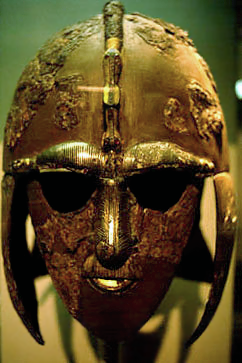
The saxon boat burial in England looks just like a buried viking ship to almost anyone.

It could be the rum talking and I realize I'm favoring the Danes today and I'll likely favor the Hanseatic League or German Mennonites tomorrow but I have one of many "gut" feelings that our Scandinavian brother clade Z372 may just be the "northern" Scandinavian clade.

It will be interesting to see what further DF95, CTS2206 and CTS2207 testing bring up. It would be interesting to see another fracture in our cluster like the 458.2 divide.

To see and to speculate about.

In hind sight now having written all this, I think my block maps are crude and oversimplified. I should attempt pinpoints where possible. These ranges may not seem too extreme when looking at pinpoints. Well, that will have to wait for another day.


Edit 7/19/2015

This post is a few years old now and although I think it has good ideas, I thought I should add some new information that I've picked up from the U106 and Z18 projects with a big heap of my usual speculative ramblings.


Tuesday, October 8, 2013

Two Flavors of Cumberland

The Cumberland Cluster at the Z18 and Subgroups project comes in two flavors now, thanks to cluster wide DYS458 retesting sponsored by our Elmer and Emery brethren.

DYS458.2 does not occur in all Z14 Cumberlands. So we know it happened after Z14 (lots of other clusters are also Z14+ but in informal polling at least one does not show DYS458.2) and further we know it happened after our distinctive "Cumberland Cluster" pattern emerged (DYS390=25, DYS5385=11-11, YCAII=19-22, DYS565=11) because some cumberlands have a 458.2 and others do not.

As it has been explained to me, micro-alleles like 458.2 have a low instance of back mutation, so once you get one, you continue to pass it down through generations. The whole number changes, but the micro-allele does not (without a really rare back mutation).

It looks like given the genetic distances in our two groups, the common ancestor to the two cumberlands lived around 1300 years ago.  Literally a case of one son having a 458.2 and another not having it.

What is interesting right now is that the 458.2+ cumberland-B group is larger than the 458.2- cumberland-A group. Thinking about things in simplistic terms I would have expected the opposite. I would have expected the Cumberland B DYS458.2 to be the smaller child group to a larger DYS458 Cumberland A parent group.

Another interesting observation about the two cumberlands. The usual suspect in migrations from mainland Europe is from east to west. So in the old cumberland cluster you had members from Poland to Ireland and the general assumption is that Poland is a good start point and Ireland the end of the line.

Now 458.2+ Cumberland B (the larger group by three quarters ranges from Poland to Wales including members from Germany, Norway, Netherlands and England (and I suspect from my ancestry.com days at least one from Denmark). Cumberland A the ancestral group, only contains proven members from the Netherlands, England and Ireland.

Again, simplistic thinking, but I would have expected the two groups to cover the same range or for Cumberland A (458.2-) to cover the larger range as a parent group giving rise to the child group somewhere on the way west.

There is always a bias towards testing in England because of people from the U.S. and Britain that have been testing for some time. So it's hard to look at all those UK testers and make sense of them in context with other tests. Our Winne family from the Netherlands may represent a large contingent from the Netherlands..and we may not know.

Also taking the largest area a group inhabits may not really give you the origin place of that group. People usually migrate to get a leg up and be more successful. So you may see more results from an area that was migrated to instead of migrated from.

It's possible for "back migrations" too,  west to east or in a big loop. People don't always really care to stick to the rules when migrating.

Still we seem to be hugging the North Sea and South Baltic sea. Cumberland B seems to have done well or itself in Poland, Germany and the UK with smaller showings in the Netherlands and Norway. Cumberland A did well in the UK with smaller showings in the Netherlands.

Earlier today I was looking up Kristiansand Norway where the Lund family is from in Cumberland B and the Google map did that auto centering thing and ..of course showed me where Kristiansand is but it also gave me a perspective of the Cumberland world while it did it.


I've made a lot of maps but it was still interesting to see the canvas laid out. It made me think about maybe we're not looking at a nice east to west migration. Maybe we're looking at a migration from a center point south west and east? If you were there near Denmark, Poland and the UK would be on the radar.

That may be my bias towards the Danes though and maybe I shouldn't say Denmark but set the focus on the blue around it. Water is not a barrier, it's a highway. Could the Cumberlands find an origin in this tangle of Islands around the Netherlands, Germany and Denmark with Cumberland-A favoring a westerly route and Cumberland B heading both west and east in good measure?


Sunday, December 23, 2012

New Eyes on Y DNA

During the course of puttering around on various DNA related forums, I began a conversation with another Z14 person who is not in my cluster. In conversing back and forth about his Y STRs and mine I asked if he would check his DYS458 to see if he had a microallele there. For all I know it is common to every Z14 person...so why not check. Truthfully I had expected that he did have one.

Interestingly though, he did not. Meanwhile other members of  my cluster do have this microallele. To me it really gives validity to the clustering that has been done by the project admins. They grouped us without knowing that we shared this oddity simply by the strength of the pattern in our other markers.

Okay so what it means to me that there is another Z14 person who does not have a microallele on DYS458:

Since I've learned that you retain the microallele through mutations it would place the mutation that caused the microallele in a period in time after the SNP Z14 came into being. I'm not sure if microalleles are a one way street, but it seems that way from what I've heard. So for me  and the people I've contacted in my cluster who have the DYS458.2 it would make the timeline something like this:

R1b -> R1b-U106 -> R1b-Z18 -> R1b-Z14 -> microallele at DYS458

I've seen the age of Z18 given as roughly 2000 years so Z14 is necessarily younger than that (although I don't know the estimates of it's age) and our shared microallele is younger than that. All it does is get you closer in time to the current date. To me that was exciting, because it really would be some sort of definition between Z14 people, creating branches in our tree and the possibility that there are SNPs that may follow these clusters that we don't know about yet.

The second thing that came about during our conversations was that I looked at some of my values that weren't as obvious at the 458.2 that I've spent so much time with.

We were talking about killer values at specific alleles. Values that almost no one shares. As an example I used my DYS463 which is 23. 

Here's an example of why this stood out to me. It has a lot to do with Ancestry.com's presentation. The highlighted values with numbers are those that differ from mine. You can see that my GATAH4 is not incredibly popular, but my DYS463 is down right offensive to other mammals. 


See it there DYS463 I have 23...nearly everyone else has 25. No one at ancestry has 23. I had never really put it together but my new Z14 person sure did. It's right on the Z18 and subgroups page labelled 

DYS463=25 or the "Root of all Evil". http://www.familytreedna.com/public/r-z18/default.aspx


Apparently if you have a 25 at DYS463 then they are 78% sure that you're going to come out R1b-Z18. So 25 is the mode for Z18 humans. It's also the mode in my cluster at FTDNA where I appear to be the only person who does not have it. I'm also one of the few people who tested for it.

That is why all of my ancestry matches seem to have this 25 value at DYS463..they are all also more likely to be R1b-Z18. I thought 25 was the value for all humans, but it turns out it's a dead giveaway for Z18 status. So the irony is that I don't have it and I'm Z18 positive. I am the odd man among my own matches.

It's odd, but how odd can it be?! Well, there are some reasons I may not see other Z14 people with my 23. One is that you would only know anything about DYS463 if you tested at SMGF or Ancestry.com for their 46 marker test or ordered the 111 test at FTDNA.

According to SMGF 23 at DYS463 is about 8% of the population. If I take that as a rough guide and look at Z18 where 25 is the mode and I'm also in a smaller subset of the population that has a DYS458.2 then the odds of finding matches at all seem pretty unlikely.

So nobody at ancestry has it, and nobody at the Z18 group had it (of those that tested for it). Time to go back to good old SMGF and have a look. 


You'll have to squint, but it's there DYS463 is 23 and who do I share it with at SMGF? The Knowltons and the Elmer. Since there are multiple Knowltons and I also have Knowltons and Elmers at FTDNA, I would imagine this is a pattern for our families. SMGF is hard because it has no haplogroup information. There are others at SMGF who have the 23 like Dester from Switzerland, Nunn from England and Burke from Ireland (apparently the name is an anglo saxon name based on burg).

I couldn't tell you who else in the cumberland cluster has it beside me the Knowltons and the Elmers, but I can say that the one Damron at Ancestry.com has 25 there. The Damerons share the DYS458 microallele, but not this really odd value at DYS463...or at least that is the case for the single Dam(e)ron test I have at Ancestry.

So to me that is exciting. if we had more 111 marker tests in our cluster it would be interesting to see who else in there has this. It's also interesting that these two families, the Knowltons and Elmers have their roots in Southeast England and maybe even more specifically East Anglia?

It makes me more confident of the work that has gone on thus far and, to me at least, it strengthens the position of England on my Y line.

It also points out how valuable another set of eyes is, even when you may not be related for the last 1500 years you can still give each other a helping hand.

Monday, November 12, 2012

DYS458.2 Poll Returns

I asked several members of different families that I've mentioned here in the past like the Coens, Damerons, Elmers, Knowltons, Emery and Winnes if they have DYS458 with a microallele of .2 (like 15.2, 16.2, 17.2). So far everyone who has gotten back has returned true. Their results vary though. Several of us have 16.2 that reports as 16 at FTDNA. One has 15.2 that reports as 16. That was unexpected. 15.2 is a very rare value. I've heard that a mutation of a 458.2 up or down would still carry the .2 so 16.2 might mutate to 15.2...but not 15.


At SMGF 16.2 results make up 0.150% of their database. For reference the value of 16 at DYS458 is 24.022% of the SMGF database. So with that marker alone you drop from roughly a quarter of men to below 1% of men in their database. That gives you an idea of how narrow the playing field gets when you take this into account. We seem to be a fairly small group of men, but really wide spread. At SMGF and Ancestry.com the 458.2 men in my match lists are from Pomerania, Germany, England, Denmark etc...in a map it would roughly match my cluster (labelled Cumberland) at the Z18 and subgroups project where we have men from Poland to Wales and possibly Ireland.

We have fairly similar STRs with a good pattern of markers in common, but a really broad range that seems to hug the South Baltic. It's not such a surprising concept. I've spent a long time with these different results and made a lot of maps. I'm just always struck by how far apart geographically we are. Every time I think I can zoom in on a location, I'm forced to zoom out again.


Monday, October 22, 2012

458.2 A New Hope

As a quick recap. My Y DNA testing at Ancestry.com showed that I have an odd marker at DYS458. Where most people have a solid number like 16, I have decimal number like 16.2 The way the .2 happens was explained to me this way: "You have 16 repeats of 458 this DYS458=N.2 is the result of an AA-insert within the repeat section." I was also told that matches would continue to have the microallele even though they may have a different whole number. So a match who was 16.2 could mutate up to 17.2 and the microallele would remain.

At SMGF (who runs tests for Ancestry.com) the percentage of men with DYS458 of 16.2 is 0.150%. 17.2 is at 0.531%. So we're talking about less than one percent of men in their database.

You can see some of my past checking into the 458.2 in a previous post.

Since that posting, as you might see in my comments, I've transferred to FTDNA and had SNP testing done there. It has been interesting to see that many of my 16.2 matches have family over at FTDNA who match me and still more interesting to see that a few of those have also tested as Z18 positive like me. I'm particularly excited to see familiar names like the Elmers, Knowltons and Damerons who have been placed in the Cumberland cluster of the Z18 project along with me.

So what is this new hope?

At the DNA Newbies forum I saw someone answer a post by using their microallele discussion with FTDNA as an example. They have a microallele that helps define their cluster in their surname project. That would certainly be true for me if my surname was not so common and I had any matches at all among Thompsons. I don't have that, but I do have a haplogroup and a cluster within that.

What was so hopeful about it was that they routinely communicate with FTDNA to check to see if new members have this same microallele. It's enough of a part of the process that they use it to determine matches. So FTDNA doesn't display microalleles, but it knows about them and can confirm them.

To test out this theory, I took a ringer (my Elmer match) who has a known 16.2 carrying relative at SMGF and asked him to see if he could ask FTDNA specifically if he had a value of 16.2 at DYS458. He agreed and he did ask. Within a few days they answered back that they were able to confirm it.

Success!

So now I've asked a few more ringers who have family members tested at both places and a few people who are matches at FTDNA that I don't know about, to see how they turn out. My end goal would be to see if this is something common to Z18 as a whole or if it's something common to the Cumberland cluster or if it could be used to further break the cluster down into smaller groups of individuals that share that same microallele.

No matter what it is great to get a confirmation for this microallele on that Elmer match because we are so close.


Sunday, August 26, 2012

Anthropology Closing the Gap on Genealogy

I was looking at my most recent map of people who are roughly like me at FTDNA who are also U106. It looks much like my other maps but just a little more focused. Having those extra four STRs from FTDNA really culled my matches down quite a bit. Still it's broadly German and English. Many of these people are also members of R1b-Z18 and a few are part of R1b-Z14 which are both under U106.


These are again people who match my "pattern" roughly, there are some markers off but overall they seem like me. I've color coded them so that Blue are just those with my rough pattern, Red are matches from FTDNA at 25 markers and the single Yellow is my match at 37 STRs or markers..I use those interchangeably.

When I talk about people matching my pattern, it means the pattern of short tandem repeats in my YDNA. Here is an example of several people who are in R1b-Z14:


Notice number two through four from the top down. They seem to have several markers or STRs in common, while the top one has many in common but not as many as the the three below seem to share with each other. You can begin to see a pattern in those last three that the first one doesn't follow. Notice also that the second one has more differentiation from the two below it. Those last two are very similar. At this level they only have one marker different. That is a closer match for STRs. My map above would contain 2 - 4 because they seem to form a rough group. Those STRs "suggest" a relationship. The closer the STRs the closer the suspected relationship.

I also talk a lot about SNPs. Single nucleotide polymorphisms don't just suggest a relationship they are the evidence of a relationship. People who share a Y SNP are definitely related to the same man, although it may be thousands of years in the past. It happens that in my example above, all those patterns in Y DNA are also people who carry the R1b-Z14 SNP. So I am related to all of them. At some point we all share a common male ancestor...of course that ancestor could be any time between now and about 0AD when it is thought the parent SNP Z18 came into being. Z14 itself has children which are younger than it. Here is an image of the ISOGG YDNA tree for my branch of  U106 as it stands today. Keep in mind that this tree is always changing as new things are learned. So like any family tree, it grows.


So there you can see U106 which I tested for with 23 and me (23 the north sea and me). Z18 is beneath that at about 2000 years old. Then Z14 is Z18's child. Beneath Z14 is Z372 and it's child (so far) L257. I've seen L257's age estimated at 1500 years ago. So somewhere between 1500 and 2000 years ago is Z14.

An actual map of people in R1b-Z18 or R1b-Z14 would probably look remarkably like my other maps here. Broadly "Germanic" with people in the Netherlands, Switzerland, Germany, England, Scotland, Ireland, Poland, Sweden, Norway, Denmark and Finland, Latvia and France. There aren't a ton of people tested in Z14 and Z18 so it appears more scattered and sparse than it actually may be. It is also basically the geographic area covered by U106 itself.

Here is an interesting map of Europe I found with rough borders for different groups about 1500 years ago:


You can see the Angles and Saxons right there on the top of Germany and eating into Denmark and then in Britain the Angles and the Saxons occupying the same sort of vertical space on the east coast. Angles are purple, Saxons..kind of puke mustard colored. U106, Z18 and Z14 would be represented in many of these groups and many that aren't on the map in Scandinavia.

What can we do to get closer than 1500 to 2000 years ago? Well, for that we go back to the STRs and suggested relationships. If I hone down my map to show just those people who match closely enough for FTDNA to list them in my matches at 25 and 37 markers I get something like this with the red dots being 25 matches and the yellow dot my 37 match:


This represents only my matches at FTDNA, both 25 and 37. All the dots except my friend in Germany there have tested Z18 positive. The yellow dot is Z14 positive.

It's possible that at the next test up I could gain or lose matches and that's the next recommended test for me. This is basically why I've picked out the Saxons for us. I don't think these groups are small enough to differentiate between an Angle and a Saxon and  I don't think the lines between people are as cut and dry as maps make them. You can get a rough idea though that people most like me are most likely in Britain, but also probably Germany. This could represent genetic evidence of the Anglo Saxon invasion of Britain or it could represent some later migration of "Germans" to England. Right now, given the ages of SNPs involved the consensus seems to be Anglo Saxons.

As things progress we may find further SNPs to split this group up and get tighter timeframes. Y SNPs will eventually enter the genealogical timeframe. When I started I was at cave paintings with R1b. Last year I was at 5000 years ago with prehistoric "Germanic" cultures and R1b-U106. Now I'm at 0 to 500AD, the fall of the Roman empire, Germanic migrations and the Anglo Saxon invasions with R1b-Z14. That's a huge leap in a few years.

Tuesday, December 21, 2010

Owning it

Owning the bad guy. Here is the digest version of what is a huge and complicated history.

Okay, so if you've followed me this far you know that my first forays into what it meant to be a Thompson led me to Ireland. Specifically Northern Ireland in the mid to late 1700s and early 1800s.
 The Red hand is kind of difficult for me. My only reference to it is of a nationalist symbol of oppression by the Northern Irish against the Republic. I do realize that it is a much older symbol and has it's base in Gaelic culture and the Ui Niell, but for some reason it's tainted for me.

Ireland was a surprise to me.  Neither of my trees led to Northern Ireland as we know it today or the Plantations specifically but they did lead to Donegal and Cork. Since my mother's family self identifies Catholic Irish (Murphy) it was especially "interesting".

It turns out I was mistaken and those family trees I built are wrong. They were good trees for their people, but they turned out to be bad trees for me. Now I'm stuck in Indiana or Pennsylvania in 1834. The odds are still in favor of us being Irish, but there's no paper trail that takes me there anymore.

Most Thompsons from Ireland are from Northern Ireland which is part of the U.K.  So if we're Irish, we're most likely Northern Irish. Most Thompsons came in a few waves of Northern Irish and Scots that left those places because of years of drought and threat of starvation or to escape persecution. They may have been England's war dogs in Ireland, but they were not allowed to be full citizens or hold office or even get government employment unless they denounced the Presbyterian Church and took up the Anglican Church..which many would not do. At one point the Queen of England nullified all marriages performed by Presbyterian ministers. Which was a great insult to many.

Here in colonies in the 1700s the Irish were not welcome to land just anywhere. Only certain colonies would let them in. Pennsylvania and North and South Carolina were among those. Pennsylvania and the Carolinas were actively recruiting Ulster Irish to try to solve one of their problems...the Natives on the frontiers.

So here again, we're the bad guys. Because of hundreds of years of constant warfare with the Irish the Ulster Irish were highly militarized and perfect to settle in the mountains and woods of the west. They usually poor, probably uneducated, and didn't bring much with them, but they were allowed some religious freedom in return for being the front line in fighting with the local Indian population. So we Thompsons were probably some part of winning the west..or the midwest as it is now, but our home base would have been Northern Ireland.

As I researched a bit of what it means to be Ulster Irish, I learned more about the Plantations and the Ulster Scots and the Borderers. Thompsons are one of those border groups that helped make up the plantations. In Ireland, we're the bad guys. The red hand of Ulster. The North Irish who voted to stay with England. We're the oppressive squatters choosing to stay with the English rather than join the new republic.

Thompsons of course are also in groups that already lived in Ireland before the plantations. Playing the odds though, it's still in favor of us being "Ulster Irish" or even just Scots or English borderers. So our home base would then be moved from Northern Ireland back in time to Northern Britain. It doesn't get much better there though.

Having lived in constant warfare between the English and Scots left the people of the borders in limbo. Each belonging to a government that was too removed to do much good. The border reivers lived in a sort of lawless tribal area. They may have been "English" or "Scottish" depending on who was conscripting or buying them into what army, but their real allegiance was to their clans and their borders neighbors.


Thomson is associated with the West March of the borders along with these other families:
Scott, Bates, Little, Glendenning, Irvine, Bell, Carruthers, Graham, Johnstone, Jardine, Moffat and Latimer.

Also it's listed in the Middle March on the English side with these families:
Anderson, Potts, Reed, Hall, Hedley of Redesdale. Charlton, Robson, Dodd, Milburn, Yarrow, Stapleton of Tynedale. Also Fenwick, Ogle, Heron, Witherington, Medford, Collingwood, Carnaby, Shaftoe, Ridley, Stokoe, Stamper, Wilkinson, Hunter, Jamieson.

Information on Thom(p)sons on the Borders

When searching for genetic matches I do see Irvines, Bells, Grahams, Scotts, Wilkinsons, Reids and Littles crop up. Not many, but some.

When thinking of Border Reivers, It may help to imagine Pirates only put them on horseback. These families were such a problem that they were cursed by a Scottish Archbishop for all eternity.
 
Again, I'm playing the odds. These are not set in stone because I have no paper that says so. Most likely, we're borders English or Scottish and part of a Reiving clan who then were planted in Ulster to try and settle that area ending up "more Irish than the Irish" and then because of religious persecution or starvation moved to the U.S. where we were installed in the western fringes of society to fight the indigenous population. Bad guys.

Where does that leave us...So we're Border Reivers the scourge of both the English and the Scots and other border clans as well. I could have left it there and left well enough alone but Genetically I'm seeing a lot of people I don't think I should see...normally. For one, I don't see other Thompsons. I do however see people from all over England and into Denmark, Norway, Sweden, Germany and even Switzerland and Northern Italy.

I've been mulling that over for a while and I've come up with a group ( a couple of groups really) that would explain that and today I think I've gotten what I was looking for. An explanation. Some official word that would tell me why, if we're Celtic Scots and Irish all these Northmen keep showing up in my lists?

Today in conversation with Genetree. A company associated with Sorenson Genomics who did my testing for ancestry.com I was told that if I have 16.2 for DYS458 and I'm R1b1b2 then I'm predicted to be R1b1b2a1a, S21, U106. Predicted is the key word. Again it's playing the odds. Just because they haven't found 16.2 in R1b1b2 outside U106 doesn't mean it doesn't exist. The only way to know for sure would be to test for that SNP.

In England it's about 20% of the population. In Ireland it's about 6%. Other hot spots are Netherlands 35%, Germany, Austria, Switzerland, Denmark, Czech Republic and on down from there. It's a huge branch of R1b, considered to be about 25% of R1b as a whole. For some reason, I'm light on matches in the Netherlands, but I've got some people popping up in most of those other places. Some are just as close as my English/Scottish matches.

So that, paired up with all my maps and bumbling around means I'm probably related to this guy:


Yep. It's Darth Vader.
These guys are the classic bad guys. They make movies about how bad these guys were. These are the guys King Arthur died fighting! Nobody loves these guys! 

It could also mean these guys:


The Vikings. They may be worse than the other guys, but for some reason people like them better. It could also be these guys:


The Frisians. Who the hell are the Frisians? Anyway you've seen the map before, but here's a viking map and I think it's a pretty good general idea of where we're talking about and sort of coincides with my personal maps of DNA matches. It also goes a long way to explaining the really spread out nature of my matches.


That map sort of makes the Western Isles and Dumfries matches make sense along with Cumbria and Northumberland, Manchester and East Anglia.
This map is helpful too. It explains many of the matches in Germany around Westphalia (Saxon homeland) and my matches in Somerset and Dover and why they're all spread out and again why there aren't many of them. So far I think Genetics has a really hard time telling an Angle from a Frisian from a Dane from a Jute from a Geat so my specific background could be among any of them.

Bad guys. All bad guys!

I will submit this one argument in defense of my DNA though. It may not be as evil and invadery as genetics companies might have you think. It could be just as Celtic and Indigenous to Britain as any other. Many people are making just that argument and there is no invasion necessary for regular continental migrations to equal today's populations of U106 in Britain. It's also good to remember that the Belgae were in Britain before the Romans and were probably in Ireland as well. Even Julius Caeser coudn't sort them out between Germans and Celts...so we could be as British as the next guy.

If anything my DNA is the DNA of people on the edge. We're on the edge of Asia, We're on the edge of the main Celtic hubs, on the Edge of the European continent. On the edge of England, Ireland, Scotland and Wales. Living on the edges of England and Scotland. On the edge of The British colonies in the new world. These are people that are always in motion, always pushing outside the bounds. They're always going to be the "other".

For a refreshing break from considering all the carnage and mayhem my genes may have caused in the world read this article entitled:

Germanic invaders 'did not bring apartheid' to Anglo Saxon Britain


I'll leave off with this thought. I've seen a few references to vikings in recent years that give them Scottish accents (robots, how to train your dragon, one even shows up in the 13th warrior) mostly because the Scottish accent sounds damn cool. 

In our case though, maybe it's true.